Rise
A Carpenter’s Idea That Became a Global System
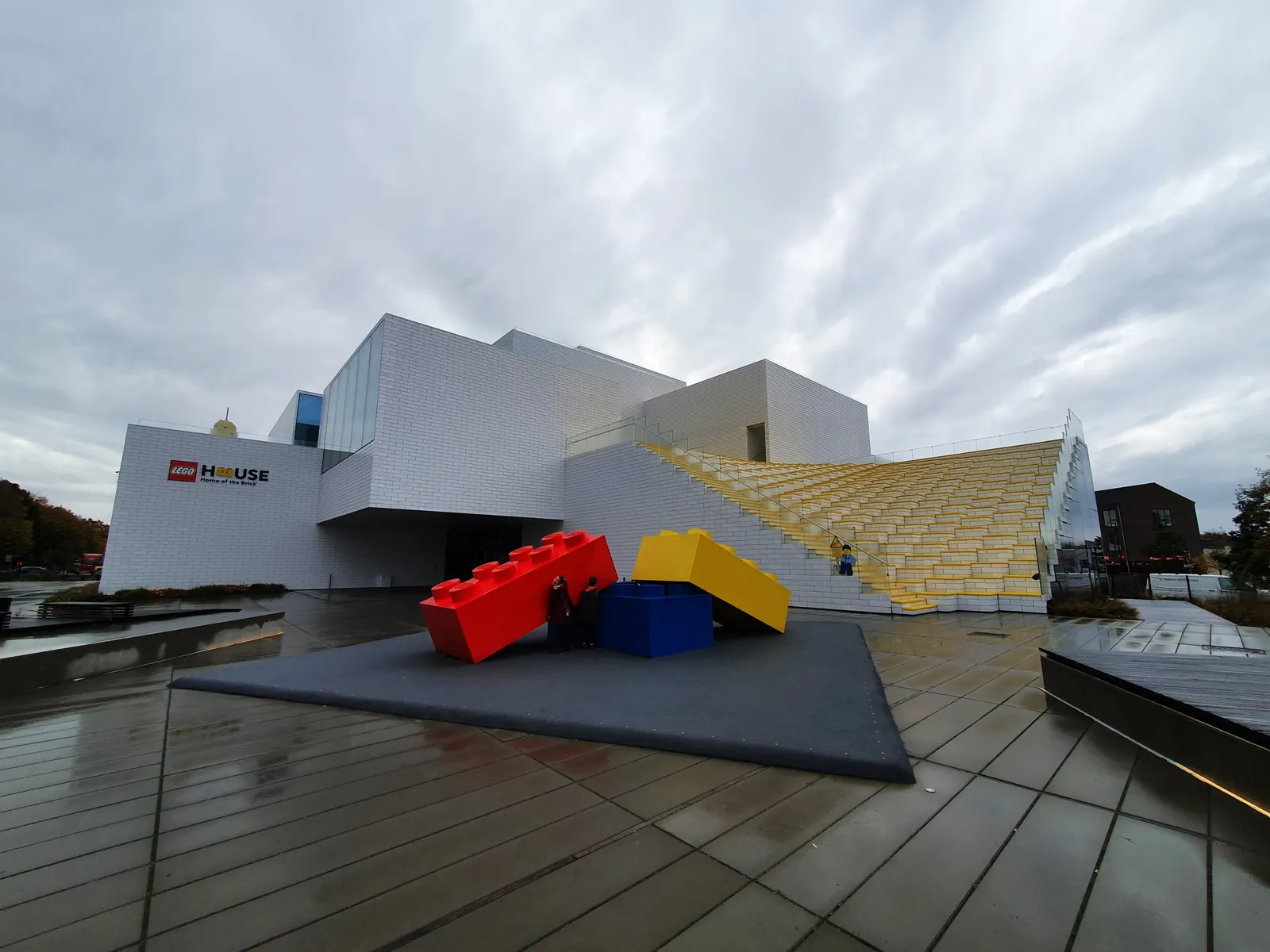
LEGO began in 1932 as a small carpentry workshop in Billund, Denmark, run by Ole Kirk Christiansen, who initially produced wooden toys during the difficult economic conditions of the Great Depression. The company’s name, derived from the Danish phrase “leg godt,” meaning “play well,” reflected a founding philosophy that would guide the company for decades.
The decisive innovation came in 1958, when LEGO patented its now-iconic interlocking brick design — a system precise enough that bricks manufactured decades apart remain compatible with one another. That patent underpinned LEGO’s expansion into one of the most recognized toy brands in the world, built around an endlessly recombinable system rather than any single product.
Fall
Chasing Growth Beyond the Brick
By the 1990s, LEGO’s leadership, concerned that the core brick business had matured and that children’s attention was shifting toward video games and other digital entertainment, pursued an aggressive diversification strategy. The company built and operated Legoland theme parks, launched clothing lines, entered video game publishing, and introduced entirely new toy concepts, including the action-figure-style Galidor and Jack Stone lines, that departed significantly from LEGO’s traditional brick-building system.
This diversification dramatically increased organizational complexity. The number of unique LEGO piece types proliferated into the thousands as designers pursued increasingly specific, single-use components for elaborate individual sets, undermining the interchangeable, endlessly recombinable quality that had originally made the brick system so valuable and cost-efficient to produce.
LEGO posted its first-ever loss in company history in 1998, an early signal that the costs of this sprawling diversification were outpacing the revenue it generated. Rather than retrenching immediately, the company continued expanding into new ventures through the early 2000s, compounding the underlying structural problem rather than addressing it.
Crisis
Weeks From Collapse
The consequences of a decade of unfocused expansion arrived in full force in 2003, when LEGO reported a loss of approximately DKK 1.4 billion (roughly $240 million at the time), one of the largest losses in the company’s history. Losses continued into 2004, and later company accounts describe LEGO as having come within weeks of being unable to meet its financial obligations — a genuine, if quietly managed, brush with insolvency for a company still privately controlled by the founding Christiansen family.
The scale of the underlying operational dysfunction became clear during the subsequent turnaround: LEGO’s piece catalog had grown so large and specialized that the company was reportedly losing money on a significant share of the products it sold, since bespoke, single-use pieces designed for one specific set could not be reused efficiently across the broader product line the way the original, more universal brick shapes could.
The family that had controlled LEGO for three generations made the consequential decision to recruit an outside CEO — Jørgen Vig Knudstorp, a former McKinsey & Company consultant who had joined LEGO in a strategy role but had no prior toy industry background — to lead the recovery, a significant departure for a company that had always been led by a member of the founding family.
Turnaround
Selling the Theme Parks to Save the Bricks
Knudstorp’s central diagnosis was that LEGO had lost sight of what made it valuable in the first place: the brick system itself, and the disciplined creativity required to build compelling products within its constraints. His turnaround plan prioritized shedding businesses that, however individually reasonable they may have seemed at inception, had pulled management focus and capital away from that core.
The most visible move was the 2005 sale of a majority stake in the Legoland theme parks to Merlin Entertainments, backed by private equity firm Blackstone. Theme parks were capital-intensive, operationally distinct from toy manufacturing, and had little synergy with LEGO’s core competency in product design and manufacturing — precisely the kind of diversification Knudstorp’s recovery plan sought to reverse.
Alongside the theme park sale, LEGO wound down its clothing business, discontinued underperforming non-brick toy lines like Galidor, and undertook a dramatic simplification of its own product catalog, cutting the number of unique piece types and colors substantially to restore the manufacturing efficiency and creative discipline the original brick system had been built around.
Strategy
Licensing Culture, Not Just Selling Bricks
With the core business stabilized, LEGO’s growth strategy shifted toward combining its building system with externally licensed intellectual property that already had passionate, built-in audiences. A licensing relationship with Star Wars, in place since 1999, deepened considerably during the recovery, and was joined by additional licensed themes including Harry Potter, and later Marvel and DC characters — each giving LEGO instant relevance to major entertainment franchises without needing to build brand recognition from scratch for every new theme.
LEGO also formalized a more disciplined internal innovation process, instituting stricter reviews of new set concepts to prevent the kind of unconstrained product proliferation that had contributed to the crisis, while still preserving space for creative experimentation through initiatives like LEGO Ideas, which let fan-submitted concepts become officially produced sets.
The 2014 release of “The LEGO Movie,” produced with Warner Bros., extended the same logic into feature filmmaking: a genuinely well-reviewed, commercially successful film that reinforced LEGO’s cultural relevance to both children and adults, without requiring LEGO itself to bear the full production risk of a major studio film.
“The crisis wasn’t about the brick. It was about everything we had built around it that had nothing to do with why people loved the brick in the first place.”
Leadership
An Outsider the Founding Family Trusted With the Truth
Jørgen Vig Knudstorp’s appointment as LEGO’s first non-family CEO in 2004 reflected the founding Christiansen family’s recognition that the crisis required a level of dispassionate restructuring that an insider, or another family member, might have found difficult to execute against decades of internal sentiment attached to businesses like the theme parks.
Knudstorp’s consulting background shaped his approach to the turnaround: an early, rigorous diagnosis of where the company was actually losing money at the level of individual products and piece types, rather than relying on broad brand sentiment or historical assumptions about what LEGO needed to be.
Notably, the Christiansen family retained ownership of LEGO throughout the crisis and recovery, choosing to bring in outside leadership rather than sell the company or take it public — a decision that gave Knudstorp the long-term orientation to pursue a multi-year structural recovery rather than the shorter-term pressures a newly public company’s leadership might have faced from outside shareholders.
Innovation
Constraint as a Creative Discipline
The most significant innovation of LEGO’s recovery was cultural and procedural rather than a specific new product: reinstating design discipline that treated the interlocking brick system’s constraints as a creative asset rather than a limitation to be engineered around with ever more specialized, single-use pieces.
LEGO Ideas, launched during the recovery period, innovated on where new product concepts could come from, allowing fans to submit and vote on set ideas that LEGO would then produce and pay royalties on if selected — a structured way to harness enthusiast creativity without the unconstrained internal product proliferation that had characterized the pre-crisis era.
LEGO also expanded thoughtfully into digital and screen entertainment — video games, television, and film — treating these as extensions that reinforced the physical brick-building experience rather than replacements for it, a more disciplined version of the digital diversification instinct that had contributed to the earlier crisis when pursued without the same underlying strategic coherence.
Financial Recovery
From a Record Loss to the World’s Most Profitable Toy Company
LEGO’s financial recovery was both rapid and durable. Following the 2003–2004 losses and the divestment of the theme parks and other non-core businesses, the company returned to sustained profitability within a few years, with revenue and profit both growing steadily through the second half of the 2000s and accelerating further into the 2010s.
By 2015, LEGO had surpassed both Mattel and Hasbro to become the world’s largest toy company by revenue, and its profit margins, driven by the operating discipline restored during the turnaround, made it the most profitable major toy company globally — a striking reversal from a company that, roughly a decade earlier, had been within weeks of being unable to meet its financial obligations.
The turnaround has since become one of the most widely taught case studies in business schools for demonstrating how radical portfolio simplification, rather than continued diversification, can be the correct response to a company that has lost sight of its core value proposition.
Lessons
What LEGO’s Turnaround Still Teaches
LEGO’s recovery is among the clearest illustrations of a company nearly destroying itself through well-intentioned diversification rather than external disruption or a single bad product decision. Theme parks, clothing, and experimental toy lines each likely seemed like reasonable growth bets individually; together, they diluted management focus and capital away from the core brick business that generated the company’s enduring value.
The second lesson concerns the discipline required to reverse diversification once it has taken root. Selling the Legoland parks meant giving up a visible, prestigious part of the LEGO brand experience, a decision that would have been organizationally and emotionally difficult for leadership deeply attached to the company’s recent history — precisely the kind of decision an outside CEO, without that attachment, was better positioned to make.
The third lesson is about treating constraint as a creative asset rather than an obstacle to engineer around. LEGO’s pre-crisis proliferation of specialized, single-use pieces seemed to serve individual set designs, but it undermined the interchangeable system that made the brand valuable in the first place — a reminder that a core product’s original constraints are often the source of its value, not an impediment to be quietly abandoned in pursuit of short-term product novelty.